Lorem Ipsum is simply dummy text of the printing and typesetting industry. Lorem Ipsum has been the industry’s standard dummy text ever since the 1500s, when an unknown printer took a galley of type and scrambled it to make a type specimen book. It has survived not only five centuries, but also the leap into electronic typesetting, remaining essentially unchanged. It was popularised in the 1960s with the release of Letraset sheets containing Lorem Ipsum passages, and more recently with desktop publishing software like Aldus PageMaker including versions of Lorem Ipsum.
Category: F-Commerce
-

Flutter App Development Guide
Flutter app development is growing rapidly and now powers over 45% of new cross-platform apps as of 2025. Backed by Google, Flutter continues to evolve and now offers smarter, more efficient builds across both Android and iOS. With the latest stable release, Flutter 3.38 has brought improved web hot reload and polished desktop refinements, enough to make it one of the fastest build-and-test cycles in the industry.
It doesn’t even stop here! The real excitement is growing around the Flutter 4.0 release. Expect it to come with Impeller 2.0 for smoother rendering, Dart 4.x for faster compile times, and many more exciting features like this.
Today’s Flutter development guide for 2025 will be a roadmap for developers, startups, and tech enthusiasts. You’ll get to explore practical techniques and real industry insights around this framework. Read on!
Key Takeaways
- Flutter app development is cost-effective due to a shorter development cycle and tools availability.
- Flutter is suitable for building apps for multiple industries, including fintech, healthcare, enterprise, and so on.
- With strong community support and frequent Google updates, Flutter ensures stability.
- Advanced state management ensures efficient UI updates, while Pub.dev packages allow developers to quickly redefine features.
What Is Flutter and Why It Dominates App Development in 2025?
Flutter offers an all-in-one development toolkit with a single codebase to build apps for any preferred platforms. It is built on Google’s robust engineering standard and uses Dart’s reactive model. You will get high-speed and native-like performance on every platform.
A Brief History of Flutter
Flutter started its journey with a Google experiment called Sky in 2015. The goal was to create extremely fast Android apps. Following this, Google has released the first official version, Flutter 1.0. It came with a widget-based design system. Over time, Flutter released new versions, capable of building apps for both Android and iOS. Each of the following versions added more features and improved performance.
- Flutter 2.0: Beyond just mobile, the version was released to build web apps as well. This includes Chrome, Firefox, Safari, and Edge, with more stable performance and reduced crashes.
- Flutter 3.0: This version launched in May 2022 and became fully multi-platform beyond mobile and web. It targeted macOS, Linux, and Windows with improved graphics.
- Flutter 3.16+: Released on November 15, 2023, Flutter came as a more efficient and fast-loading framework. It offers faster rendering with WebAssembly compilation.
In short, over the past few years, the consistent evolution of Flutter has set it as a leading open-source technology. According to recent surveys, Flutter has become one of the most widely used cross-platform frameworks (around 46% of framework-using developers report using it), and over 90% of surveyed Flutter developers are satisfied with the visual quality and performance of their apps.How Flutter App Development Works
Flutter utilizes the Reactive architecture, where the app UI automatically changes when your app’s data changes. Every element on the screen is a widget, which makes building and customizing the UI easier.
Flutter Architecture Explained
Flutter is a specialized 3-layer architecture.
- The first one is the Framework layer, which contains all the widgets. It handles layout and UI logic. As needed, the widget gets updated when data changes.
- Second is the Engine layer which connects to Flutter’s graphics library. It manages the rendering pixels where UI elements will be placed in the frame.
- The final layer is the Embedder layer. It connects the engine to the platform where the app will run. Above all these layers, Dart executes the app’s code and manages UI updates.
Setting Up the Flutter Development Environment
To start using Flutter, you must install the Flutter software (SDK), then set up tools for each platform and configure the code editor. Choose between Android Studio and VS Code. Finally, build apps, debug code, and test your app on virtual devices.
Flutter Setup on Windows / macOS / Linux
First, you have to install Flutter on your operating system. Download the Flutter SDK on Windows. Then add it to your system path to make the Flutter commands work. Developers run the Flutter Doctor. It is essential to check that the installation is in good health.
To install Flutter on Windows, you must install Visual Studio tools. On macOS, you need Xcode to build and run iOS apps. Additionally, on Linux, install compilers and development libraries such as GCC, Clang, and GTK.
Common Setup Errors and Fixes
Here are the most common errors that developers often face:
- Flutter fails to locate the Android development tools. It mostly happens if you don’t install the SDK or if the path isn’t set.
- Developers often find that the cmdline-tools component is missing. Install Android command-line tools from Android Studio’s SDK Manager.
- There is also a common error named “Unable to locate Gradle script” in Flutter. It suggests that something is preventing Gradle from running properly on your machine. Check if there are unwanted programs or antivirus software on your machine.
- While installing on Windows, you may face a common error like “CMake is not installed”. To fix it, open Visual Studio Installer, edit your installation, run the flutter doctor command, and ensure all the components are installed.
- Another frequently reported issue is the error “Flutter: Unable to find bundled Java version.” Try reinstalling Android Studio or downloading a fresh JBR and pointing Gradle to it.
Flutter App Lifecycle & Build Process
Flutter’s development process lies within its structured process. It equips hot reload through which you can change the UI and see results almost instantly. Also, if needed, Flutter architecture only rebuilds the parts of the UI, keeping the performance as it is. Developers utilize some tools to track data changes and update only the necessary widgets.
Flutter App Development Process
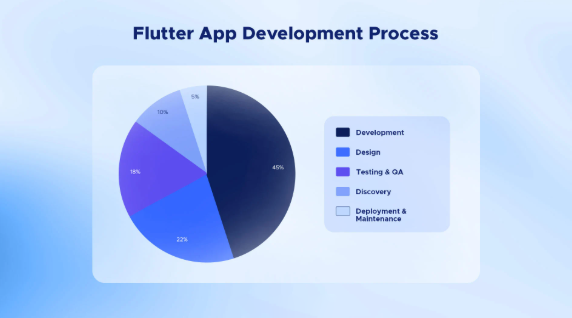
Flutter performance optimization becomes easier when you take advantage of the advanced design patterns. Here we have listed some go-to Flutter development techniques you can consider.
State Management Approaches
With the proper Flutter state manager approaches, you can better handle data and UI updates. Choose based on your app size and complexity.
- Flutter app development is cost-effective due to a shorter development cycle and tools availability.
-

Blog Title Here
There are many variations of passages of Lorem Ipsum available, but the majority have suffered alteration in some form, by injected humour, or randomised words which don’t look even slightly believable. If you are going to use a passage of Lorem Ipsum, you need to be sure there isn’t anything embarrassing hidden in the middle of text. All the Lorem Ipsum generators on the Internet tend to repeat predefined chunks as necessary, making this the first true generator on the Internet. It uses a dictionary of over 200 Latin words, combined with a handful of model sentence structures, to generate Lorem Ipsum which looks reasonable. The generated Lorem Ipsum is therefore always free from repetition, injected humour, or non-characteristic words etc.

This is Jiaur Rahman
-
Streamlining F-Commerce in Bangladesh
Discover how API Solution Ltd. is revolutionizing Facebook commerce with a powerful, scalable platform that combines Django’s robustness with Next.js’s speed, tailored for the unique needs of Bangladeshi entrepreneurs.
In the fast-paced world of Facebook commerce, having a reliable, scalable, and user-friendly platform can mean the difference between a hobby and a thriving business. Enter API Solution Ltd.—a Dhaka-based tech company that has built a tailored F-commerce solution designed to empower sellers, streamline operations, and enhance customer experiences across Bangladesh.
At the heart of their platform lies a modern tech stack: Python Django for the backend and Next.js for the frontend. Here’s how this combination is driving results for F-commerce entrepreneurs.
Why Django & Next.js?
Django provides a secure, scalable, and rapid development environment, perfect for handling complex e-commerce logic, inventory management, and user authentication. Next.js delivers a lightning-fast, SEO-friendly frontend with seamless navigation—essential for keeping today’s mobile-first shoppers engaged.
Together, they offer a full-stack solution that is both powerful and adaptable to the unique challenges of the Bangladeshi market.
Key Features of the Platform
1. Seamless Facebook Integration
The platform connects directly with Facebook Pages and Shops, allowing sellers to sync products, automate posts, and manage orders from a single dashboard. Real-time notifications keep sellers updated on new inquiries and purchases from Facebook.
2. Unified Inventory & Order Management
Sellers can manage inventory across multiple Facebook pages and groups from one central interface. The system tracks stock levels, processes orders, and even generates invoices automatically—reducing manual errors and saving time.
3. Integrated Payment Gateways
Understanding local preferences, the platform supports popular Bangladeshi payment methods like bKash, Nagad, and Rocket, alongside cards and cash-on-delivery. All transactions are encrypted and secure, addressing a major trust barrier in F-commerce.
4. AI-Powered Customer Insights
Using Django’s data-handling capabilities, the platform analyzes customer behavior, best-selling products, and peak engagement times. Sellers receive actionable insights to optimize their posting schedules and promotions.
5. Responsive Seller Dashboard & Storefront
Built with Next.js, the dashboard is fast, intuitive, and works beautifully on any device. Sellers can customize their storefronts, track performance metrics, and communicate with customers via integrated live chat.
6. Automated Marketing Tools
Schedule posts, run flash sale announcements, and use template-based promotional content to boost visibility—all within the platform.
Built for Bangladesh: Addressing Local Challenges
- Low-Bandwidth Optimization: The Next.js frontend is optimized for slower connections, ensuring accessibility even in areas with limited internet.
- Bengali Language Support: Fully localized UI and customer communications.
- Logistics API Integration: Partnerships with local delivery services enable real-time tracking and shipping cost calculations.
Success Story: “Bohubrihi Boutique”
A Dhaka-based fashion retailer using API Solution Ltd.’s platform reported a 40% increase in orders within three months. The owner, Tahmina Rahman, says:
“Before, managing orders from Facebook comments and Messenger was chaotic. Now, everything is organized in one place—from payments to delivery tracking. It’s like having a full-time assistant!”
The Technology Behind the Scenes
- Backend (Django): REST APIs, PostgreSQL database, Redis for caching, Celery for background tasks (e.g., sending order confirmations).
- Frontend (Next.js): Server-side rendering for fast load times, responsive design with Tailwind CSS, and seamless integration with Django via API calls.
- Security: Django’s built-in protections against common vulnerabilities (CSRF, XSS), along with JWT-based authentication for safe user sessions.
Future Roadmap
API Solution Ltd. is continuously innovating, with plans to introduce:
- Facebook Live Sales Integration
- WhatsApp Business API connectivity
- Advanced analytics with predictive stock alerts
Why Choose This Solution?
For F-commerce sellers in Bangladesh, this platform isn’t just another tool—it’s a growth partner. It reduces operational headaches, builds customer trust, and scales effortlessly as your business expands.
Whether you’re a solo entrepreneur or a growing brand, API Solution Ltd.’s Django and Next.js-powered platform offers the technology foundation to succeed in Bangladesh’s dynamic digital marketplace.
Ready to transform your F-commerce business?
Learn more about API Solution Ltd.’s platform at api-solution.com/fcommerce or schedule a demo today.This blog post is based on publicly available information and platform features. For detailed technical specifications or pricing, please contact API Solution Ltd. directly.
-

F-Commerce in Bangladesh: Why Your Facebook Feed is the New Marketplace
From homemade pickles to trendy clothing, Facebook is transforming into a bustling digital bazaar in Bangladesh. Discover how F-commerce is reshaping local shopping habits and offering new opportunities for entrepreneurs.
Walk into any Bangladeshi home, and you’ll likely find someone scrolling through Facebook—not just for memes or updates, but to shop. Welcome to the world of F-commerce, where Facebook serves as the storefront, catalog, and checkout counter for thousands of small and medium businesses across the country.
What is F-Commerce?
F-commerce, or Facebook commerce, refers to buying and selling products directly through Facebook and its ecosystem—using pages, groups, Messenger, and Instagram. In Bangladesh, it’s more than a trend; it’s a lifeline for entrepreneurs, especially women and youth, who leverage social media to reach customers without investing in physical shops or complex websites.
Why F-Commerce is Booming in Bangladesh
- Mobile First, Facebook Always
With over 45 million Facebook users in Bangladesh, the platform is where people already spend their digital time. Affordable smartphones and data plans have made it easier than ever to browse and shop online. - Low Entry Barriers
Starting an F-commerce business requires minimal investment. A Facebook page, a few product photos, and a payment method (like bKash or Nagad) are enough to get going. - Trust Through Community
Sellers often use Facebook Groups to create niche communities (e.g., “Dhaka Fashion Lovers” or “Organic Food Bangladesh”). Here, buyer reviews and active interactions build trust—a crucial factor in a market where digital payment security is still a concern. - Hyperlocal and Personalized
From Savar’s handmade jewelry to Sylhet’s natural honey, F-commerce enables localized trade. Sellers use Messenger for personalized customer service, sharing product details, and even arranging doorstep delivery.
Success Stories
- Aarong & Kay Kraft: While established brands use F-commerce for promotions, small artisans also sell directly via Facebook Live showcases.
- Home Chefs & Bakers: During the pandemic, many home-based entrepreneurs gained loyal customers by selling cakes, iftar items, and homemade snacks through Facebook.
Challenges to Consider
- Payment Trust Issues: Cash-on-delivery remains popular due to concerns over digital fraud.
- Logistics: Delivery outside major cities can be unreliable.
- Page Imposters: Fake pages and scams sometimes erode buyer confidence.
Tips for Aspiring F-Commerce Sellers
- Use High-Quality Images & Videos – Visuals sell.
- Engage Regularly – Reply to comments and messages promptly.
- Leverage Facebook Live – Show products in real-time to build urgency.
- Clear Policies – Define return, delivery, and payment terms clearly.
The Future
As Facebook integrates more shopping features and digital payment systems improve, F-commerce in Bangladesh is set to grow even more structured. Meanwhile, hybrid models—Facebook for discovery, websites or apps for transactions—are emerging.
Whether you’re a buyer looking for unique local products or an entrepreneur testing your first business idea, F-commerce in Bangladesh offers a dynamic, community-driven marketplace right at your fingertips.
Have you bought or sold anything via Facebook recently? Share your experience in the comments!
- Mobile First, Facebook Always